
Virginia 72 Hour Booking Records
Virginia 72 hour booking records show recent arrests and jail intake details from sheriff's offices and regional jails across the state. These rosters list names, charges, booking dates, and custody status for people held within the past three days. You can search Virginia 72 hour booking logs through county sheriff portals, regional jail websites, the statewide VINELink system, and Virginia court case lookups. Most local jails post a daily booking sheet online so the public can check who is in custody and what the charges are.
Virginia 72 Hour Booking Overview
Where to Find Virginia 72 Hour Booking Records
Recent booking records in Virginia live with the agency that made the arrest. The local sheriff or city police books the person into a county jail or regional jail. That jail then posts the name, charges, and booking date to its inmate roster. Many jails refresh the roster every few hours. Some update once a day. The 72 hour booking list is the slice of that roster that shows people taken in over the past three days.
The Virginia State Police runs the Central Criminal Records Exchange, the state's main repository for arrest history. The CCRE holds felony and Class I or Class II misdemeanor records sent in by every law enforcement agency in the state. You can ask for your own report through Form SP-167 at vsp.virginia.gov. The fee is $15 per name-based search. Fingerprint checks pull more detail but cost more and take longer.
The Virginia Department of Corrections offender locator tracks people serving state prison time. It does not show recent jail bookings. For someone just brought in over the last 72 hours, the local jail roster or VINELink is the right tool. VADOC inmates show up about 60 days after sentencing.
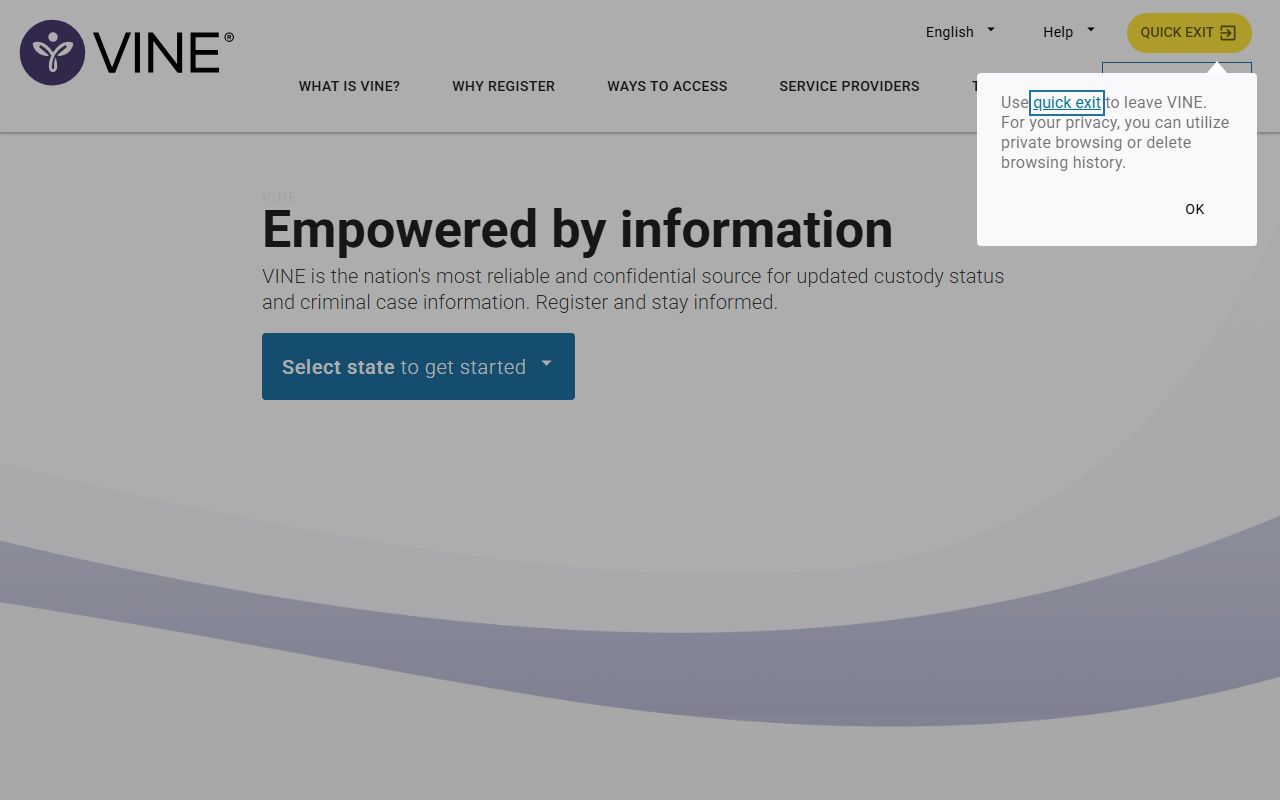
VINELink is the easiest statewide tool. It pulls live custody data from the bulk of Virginia jails and the state prison system. You can look up a person by name, see what facility holds them, and sign up for free alerts when their custody status changes. The hotline at 1-800-467-4943 runs around the clock in English and Spanish.
How to Search Virginia 72 Hour Booking Logs
You have a few ways to look up Virginia 72 hour booking info. Online jail rosters are the fastest. They show recent intakes, charges, bond amounts, and release status. Some sheriffs post mugshots, others do not. Most rosters can be sorted by booking date so the newest entries show up first.
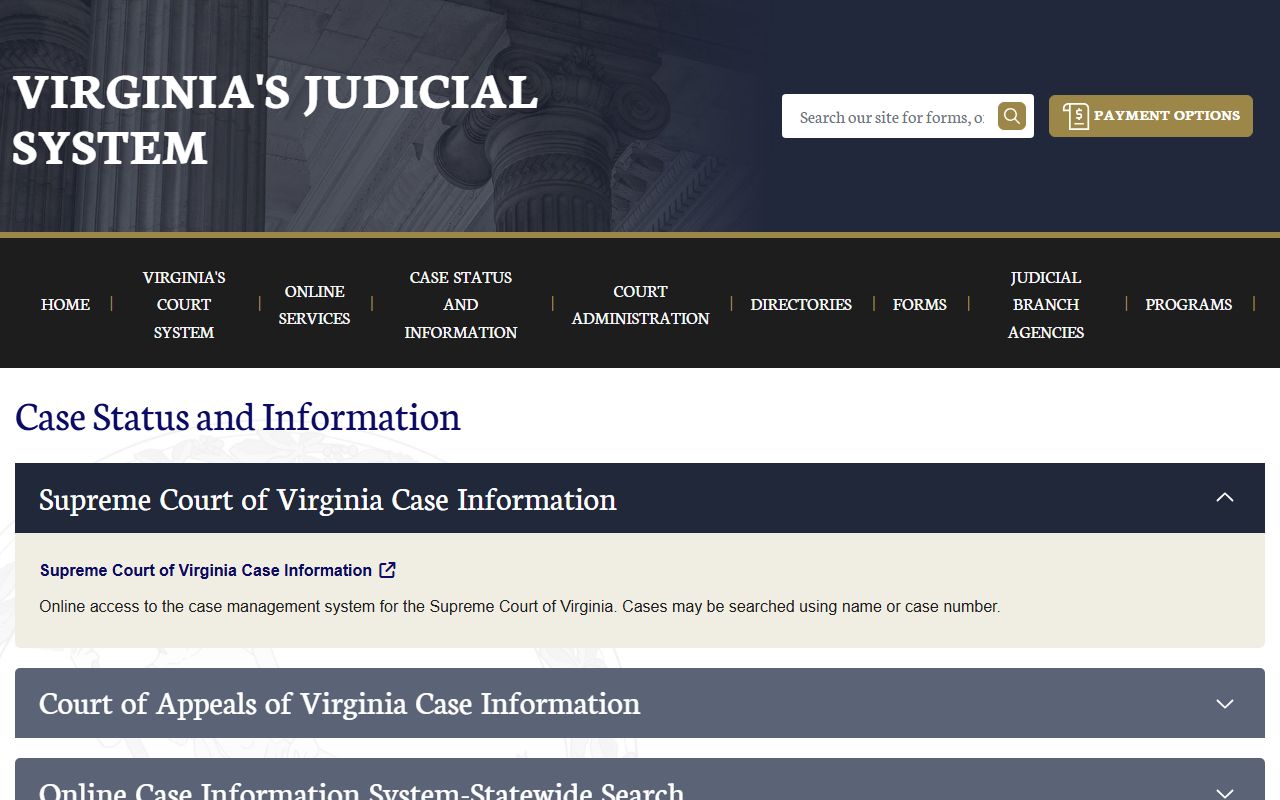
For court outcomes tied to a booking, the Virginia Courts Case Information System covers General District and Circuit Court records statewide. You can search by name, hearing date, or case number. Charging documents, hearing dates, and dispositions all show up there once a case is filed. The site is free and runs every day.
To run a name search on a Virginia jail roster, you usually need:
- First and last name of the person in custody
- Approximate date of arrest (helps when the name is common)
- City or county where the arrest happened
- Date of birth if you have it
If the person you are looking for does not show up online, call the jail. Most facilities have a 24 hour line for custody checks. Staff can tell you if someone is in the building and what the bond is. They will not always read out the full charge list over the phone, but they can confirm a booking.
Virginia Arrest and Booking Law
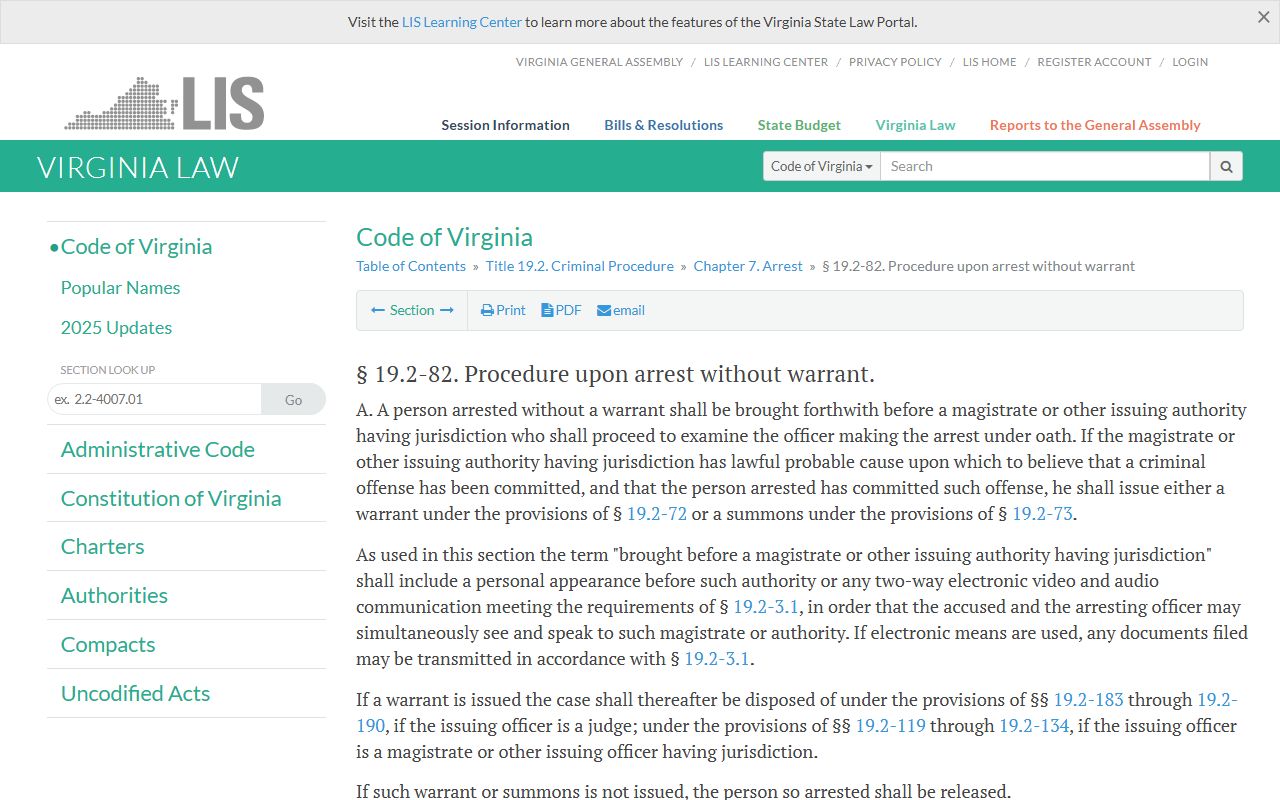
Arrest procedure in Virginia is set by Virginia Code § 19.2-82. The statute says a person taken into custody without a warrant must be brought "forthwith" before a magistrate. The magistrate then reviews probable cause and decides whether to issue a warrant or summons. This step has to happen fast. It is the legal backbone of the 72 hour booking window.
The "forthwith" rule is wide. A magistrate can hear the officer in person or over a two-way audio and video feed under § 19.2-3.1. Either way, the goal is the same: a neutral judicial officer looks at the case before the arrest turns into a long stay in jail. If the magistrate finds no probable cause for a misdemeanor, the officer cannot move forward with a summons.
Magistrates work statewide, day and night. The system is run by the Office of the Executive Secretary of the Supreme Court. Magistrates have the power to issue arrest warrants, search warrants, emergency custody orders, and bail orders. Their role keeps the booking process in line with Fourth Amendment standards.
Virginia Code § 19.2-389 limits public access to raw criminal history data. That law treats CCRE files as restricted. Court records and current jail rosters are still open under separate rules. The Virginia FOIA law in § 2.2-3700 covers public requests for booking sheets, arrest reports, and jail intake logs. Most agencies treat the basic booking entry, the name, charge, and date, as a public record.
Note: Records of an active investigation or sealed juvenile cases may be withheld under Virginia Code § 2.2-3706. Booking facts are usually still released even when the larger file is closed.
What a Virginia 72 Hour Booking Record Shows
A standard Virginia 72 hour booking entry includes the basics: name, age, date of birth, booking date and time, charges, bond amount, and arresting agency. Some jails add a mugshot, height, weight, eye and hair color, and the magistrate's case number. Most include the projected court date and the courtroom assignment.
Bigger jails post more detail than small ones. The Fairfax County, Virginia Beach, and Richmond jails publish full booking logs with photos. Smaller county jails may show a name list with basic charge codes. Either way, the same set of fields drives the record. Each one ties back to a magistrate's order or a warrant from a court.
Common entries on a 72 hour booking sheet:
- Inmate name and identifying info
- Arrest date, time, and location
- Arresting agency and officer
- List of charges with code sections
- Bond type and amount
- Court date and courtroom
- Custody status, including hold or release
Once a person makes bond or is released, some jails take the entry off the public roster after a few days. Others keep it up. If you need the record after it drops off, file a Virginia FOIA request with the sheriff or police department. They have five working days to respond.
Virginia 72 Hour Booking Records Access
Most basic booking facts in Virginia are public. You do not need a reason. You do not need to be related to the person. The sheriff or police department releases the name, charge, and booking date on request. This is a long-standing practice tied to the Virginia Freedom of Information Act in § 2.2-3700 and following.
Some details get held back. Active investigation files, juvenile records, victim info, and sealed cases stay closed. The agency cites the exact statute when it denies a request. If you disagree, you can appeal to a circuit court or to the Virginia FOIA Council for a non-binding opinion. Most people start by talking to the agency's FOIA officer.

Fees stay modest for small requests. The first 50 pages of a standard FOIA file are usually free. After that, the agency can charge for staff time and copies. Big requests over $200 may need an upfront payment. Always ask for an estimate. A short, focused request keeps costs down.
Sex offender data is searchable on the Virginia Sex Offender and Crimes Against Minors Registry. That database covers people convicted of certain offenses under Virginia Code § 9.1-900 to § 9.1-918. It is separate from the daily booking roster but connects back to it for some cases.
Regional Jails and 72 Hour Booking in Virginia
Virginia runs about 72 local and regional jails. Some counties keep their own facility. Others share a regional jail with neighbors to cut cost. Either way, the jail handles intake, booking, and short-term holds for people awaiting court. The VADOC facilities directory lists every jail in the state with phone numbers and addresses.
Regional jails often serve four to six counties at once. Examples include the Western Virginia Regional Jail near Salem, the Hampton Roads Regional Jail in Portsmouth, the Pamunkey Regional Jail near Hanover, and the Meherrin River Regional Jail in Alberta. Each has its own roster page. Each updates on its own schedule. Most show recent bookings within hours of intake.
If you do not know which jail holds the person, start with VINELink. It pulls from most of the participating facilities at once. If they are not on VINELink, work backward from the city or county where the arrest happened. Call the local sheriff. The sheriff's dispatcher will usually point you to the right jail.
Tip: A person arrested in one Virginia county can end up at a regional jail an hour away. Check both the local sheriff's roster and the regional jail listing if you can't find them.
Virginia Background Check and Fingerprinting
The Virginia State Police handles fingerprinting for personal record reviews. The first card is $10. Each extra card is $5. Cash, Visa, and Mastercard work. Bring two forms of ID, one with a photo. State Police Headquarters at 7700 Midlothian Turnpike in North Chesterfield does this on a walk-in basis.

To pull your own CCRE history, mail Form SP-167 with the fee to the Central Criminal Records Exchange. Processing runs about 12 to 14 business days. Next-day mail back is allowed if you cover the postage. The CCRE only holds felony and serious misdemeanor data. Lesser charges live with the local arresting agency.
If you spot a wrong entry on your record, call the CCRE Expungement and Record Challenge Section at (804) 674-6723. You will need fingerprints and proof of ID. There is no fee for the challenge process itself. For full expungement of a Virginia arrest record under § 19.2-392.2, you file a petition in the circuit court of the county where the case happened.
Browse Virginia 72 Hour Booking by County
Each Virginia county runs its own jail roster through the local sheriff or a shared regional jail. Pick a county below to find the booking lookup, contact info, and court resources for that area.
Virginia 72 Hour Booking by Major City
Virginia's independent cities run their own police departments and city jails. Pick a city below to find the local booking roster and arrest record resources.